
Should I Repair or Replace My Deck?
If your deck is showing signs of age, one of the first questions you’ll probably ask is, “Should I repair it, or is it time to replace it?” The answer isn’t always straightforward.
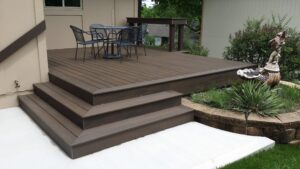
This low-profile composite deck sits less than 30 inches above grade, eliminating the need for guardrails while providing a clean, open outdoor living space that’s durable and low maintenance.
Some decks only need a few strategic repairs to provide many more years of safe use. Others may look repairable on the surface but have hidden structural damage that makes replacement the smarter investment.
After more than 20 years of repairing, remodeling, and rebuilding homes throughout the Kansas City metro, we’ve found that the biggest issues often aren’t the ones homeowners can see. Here’s what we look for when helping homeowners make the right decision.
We Always Start with Safety
Every deck inspection begins with identifying hazards and structural deficiencies.
We’re looking for problems such as:
-
- Worn or rotted deck boards, especially where boards terminate over joists.
- Loose, unstable, or deteriorated railings.
- Unsafe stairways, particularly those built by previous homeowners without proper construction methods.
- Rotting support posts.
- Structural movement or sagging.
- Signs that the deck framing may have been compromised.
Many homeowners focus on cosmetic issues because those are the problems they see every day. While replacing a few deck boards or tightening a railing may seem like a simple repair, the real concern is often hidden beneath the surface.
One of the Biggest Problems We See in Kansas City
One issue we encounter regularly involves older decks that were attached directly against the home’s siding.
Years ago, many decks were built without the air gap, flashing, and drainage details required by today’s building practices. In many cases, the deck ledger board was bolted directly against SmartSide®, Masonite, or other engineered wood siding.
Over time, rainwater travels down the exterior wall and becomes trapped between the deck and the house. Instead of draining away, moisture remains against the siding and framing where homeowners can’t see it.
Eventually, this can lead to:
- Rotting wall framing
- Deteriorated sheathing
- Mold growth inside wall cavities
- Structural damage to the home itself
Homeowners are often concerned about a loose railing or weathered deck boards, while the real problem is hidden behind the ledger board.
Because remodeling and structural repairs are a significant part of what we do, we’re able to repair not only the deck but also any damaged framing within the home if water intrusion has occurred.
Cedar Posts Are a Common Failure Point
Another issue we frequently encounter throughout the Kansas City area involves cedar support posts installed directly into the ground or concrete.
While cedar naturally resists decay better than many wood species, our climate presents unique challenges. Constant moisture combined with repeated freeze-thaw cycles eventually causes these posts to deteriorate.
Although many cedar posts last around 12 to 15 years, we’ve seen some fail in as little as 8 to 10 years where moisture remains trapped around the base.
When support posts begin to fail, the entire deck can become unsafe.
Fortunately, replacing support posts is often very manageable when the remaining framing is still in good condition.
When Repairing a Deck Makes Sense
Not every aging deck needs to be replaced.
If the primary framing remains structurally sound, repairs can often provide many additional years of service.
Repairs commonly include:
- Replacing deck boards
- Installing new railings
- Replacing rotted support posts
- Repairing stairs
- Updating hardware and fasteners
- Correcting isolated structural deficiencies
When replacing support posts, we temporarily brace the deck, remove the failed post, excavate the old footing if necessary, and install a new code-compliant concrete pier that extends above grade. We then install a galvanized post base to keep the new post out of standing moisture.
This simple improvement greatly increases the lifespan of the new support system.
We also recommend installing decorative aluminum or copper post caps on exposed wood posts. Keeping water out of the end grain significantly extends the life of the post while adding an attractive finishing touch.
Deck Boards Are Often Replaceable
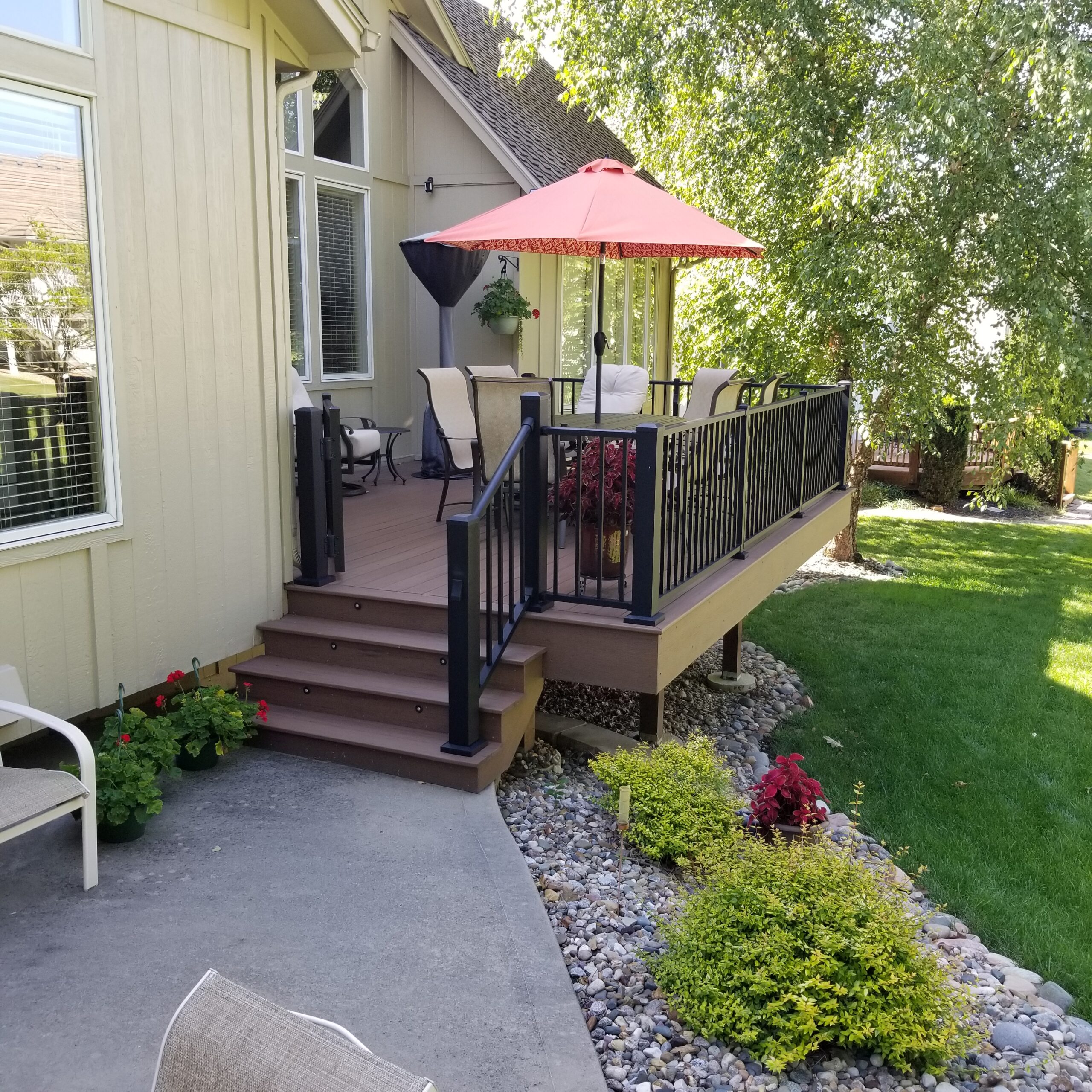
This custom composite deck features matching composite railings, comfortable outdoor furniture, and a patio umbrella, creating a durable, low-maintenance outdoor living area perfect for relaxing and entertaining.
Decking receives the most abuse from weather, foot traffic, furniture, and sunlight.
If the joists underneath remain in good condition, replacing only the deck boards is frequently an excellent option.
Homeowners often ask about switching from treated lumber to composite decking.
This is where experience matters.
Composite decking generally performs best when installed over joists spaced 12 inches on center. Many older decks were built using 16-inch spacing, and some even have joists spaced 24 inches apart.
Sometimes additional framing can be installed to properly support composite decking. Other times, we’ll discuss the performance differences so homeowners can decide whether upgrading the framing is worthwhile.
Every deck is different, and we believe homeowners deserve to understand all of their options before making a decision.
Sometimes Replacement Is the Better Investment
Eventually, there comes a point where repairing an older deck simply no longer makes financial sense.
When repairs begin approaching the cost of a new deck, replacement often provides far greater long-term value.
A new deck also creates opportunities that repairs simply cannot.
Replacement may allow you to:
- Increase the size of the deck.
- Add a cantilever for additional usable space.
- Improve traffic flow.
- Install wider, safer stairs.
- Add deck lighting.
- Upgrade railings.
- Install composite decking.
- Pour a proper concrete landing at the bottom of the stairs.
- Build the deck to current building standards.
Many homeowners initially contact us expecting a repair estimate. After reviewing all of their options, they ultimately decide that replacing the deck gives them a safer, more functional outdoor living space they’ll enjoy for years.
One Mistake Homeowners Frequently Make
One of the biggest mistakes we see isn’t choosing repair versus replacement.
It’s assuming the existing deck is the right size and layout.
Many subdivision homes were originally built with small 10-foot by 12-foot builder-grade decks.
Twenty or thirty years later, outdoor living has changed dramatically.
Today’s furniture is larger.
Families entertain more.
Grills, smokers, dining tables, conversation seating, and outdoor kitchens all require additional room.
Rather than automatically rebuilding the same deck, we encourage homeowners to think about how they’ll actually use the space.
Questions we discuss include:
- Should the deck extend farther across the back of the house?
- Would adding a cantilever create more usable room?
- Where should the stairs be located for the best traffic flow?
- Is the stairway wide enough to move furniture and appliances?
- How will guests naturally move around the space?
Sometimes a relatively small design change dramatically improves how the deck functions for years to come.
Choosing the Right Contractor Matters
Perhaps the most important advice we can offer is this:
Don’t hire solely based on price.
Instead, find a contractor who is both technically competent and genuinely interested in helping you make the right decision.
A good contractor asks questions.
How long do you plan to stay in your home?
Are you preparing to sell in two years?
Is this your forever home?
What do you want your outdoor living space to accomplish?
The answers to those questions should influence every recommendation.
Decks generally don’t produce the highest return on investment, so your budget should align with your long-term goals rather than simply buying every available upgrade.
Equally important, remember that your contractor will be working on your property for days or even weeks.
Choose someone you’ll be comfortable communicating with throughout the project—someone who listens, explains your options clearly, and follows through on their commitments.
The Bottom Line
There isn’t a universal answer to whether you should repair or replace your deck.
The right decision depends on the condition of the framing, the extent of hidden structural issues, your long-term plans for your home, and how you want to use the space.
An experienced contractor should help you evaluate all of those factors before recommending the best path forward.
At Absolute Building Concepts, we don’t believe in selling the same solution to every homeowner. We take the time to inspect your deck, explain what we find, discuss your goals, and help you make an informed decision that provides the best value for your home and your family.
If you’re unsure whether your deck is a good candidate for repair or if replacement would be the smarter investment, we’d be happy to evaluate it with you and explain your options.
Comments